The Backlog Trap: When Saving a Title Becomes a Promise
A reading backlog need not dictate your next choice. Learn to separate saved titles from reading plans and find a book that suits your attention now.

Does a reading backlog decide what you should read next? Not unless you let it. A saved title is a note about a moment of interest, not a schedule, and choosing what to read now can be much simpler than working through the list in order.
A reading backlog is a record of interest, not a queue
You might save a novel after hearing a friend describe its setting, or bookmark an essay because its headline raises a question. The list preserves the lead. It cannot tell you whether the subject still interests you, or whether you have time for a long book this week.
Treating every saved item as an assignment changes the list’s purpose. Instead of helping you find something appealing, it becomes a record of things you have not done. The older entries can start to feel more urgent simply because they have been there longer.
Separate saving from choosing. Saving means, “I may want this later.” Choosing means, “This is what I want to spend time with now.” You can make the second decision when you are ready, and you can choose something outside the list.
Age is a poor guide to what deserves your attention
An old title can still be exactly right, but its age is not evidence that it should come first. A library loan with a return date is a practical exception: the deadline changes your options. A recommendation with no deadline does not acquire a claim on your evening just by waiting.
Nor does a growing list prove that you are reading badly. Saving and reading serve different purposes. One catches possibilities; the other spends your attention. You can enjoy collecting ideas without turning every one into a plan.
Use a few cues to make choosing easier
When the list is hard to scan, add small pieces of context. Each cue should help you make a decision; if it creates more work than clarity, leave it out.
- Check the reason you saved it. If a note such as “for the descriptions of Glasgow” still appeals, keep the title in view; if you cannot recall the appeal, reread the blurb or remove it.
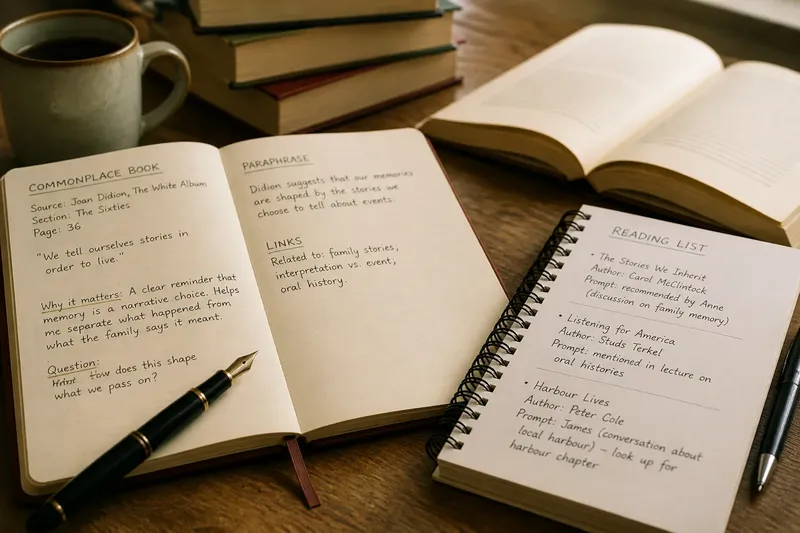
- Check the source. If a trusted friend or a magazine review prompted the save and that context matters to you, record the source; if it adds no useful information, skip the note.
- Check the format. If you want something for a walk, look for an available audiobook; if you want to read on the train, choose a paperback or a short digital essay instead.
- Check for a real deadline. If a library loan or reading-group date is approaching, decide whether you can give the title time; if not, return it or tell the group you will pass.
- Check how it fits your present mood. If you want a light, short read, choose a brief essay; if you want a sustained story, set aside a novel for a quieter stretch.
- Check whether the interest remains. If the subject still makes you curious, keep the item as an option; if it now feels like someone else’s enthusiasm, delete it.
These cues need not become a rating system. Sorting titles into elaborate scores or categories is not worth the effort if you spend more time maintaining the system than picking a book.
What should you do when the list feels heavy?
Should I start with the oldest saved title?
Only if its age matters for a practical reason, such as a due date. Otherwise, choose the title that best suits your current interest, format and available attention.
What if I save more titles than I read?
That is fine if the list still helps you find things you want. If it has become a burden, pause new saves or remove items whose original appeal has faded.
Can I stop reading a book partway through?
Yes. Starting a book is a choice, not a commitment to finish regardless of your response. Put it aside, pass it on or return to it later if the interest comes back.
When should I review my reading backlog?
Review it when choosing becomes frustrating or when you have forgotten why many items are there. Keep what still appeals; remove what no longer offers a reason to read.
A reading backlog can change with your interests
Say you save a novel about coastal walks after a friend mentions it, then begin looking for family memoirs instead. You open your list, see that the coastal novel no longer appeals, and remove it; the result is one fewer choice to sift through and a list better matched to what you might read now. The novel has not been rejected as a book. It simply no longer fits your present interest.
A reading backlog works best when it holds leads rather than obligations. Search it for a title that suits your attention today, not for proof that you have honoured every old impulse. If none of the entries appeals, close the list and choose another way to spend your time.